Los Angeles (404) 502-3502
Next Level Garage Doors And Gates
Garage Door Repair in Lakewood, CA

Los Angeles Local

Garage Door Repair in Lakewood, CA

Serving Lakewood's 1950s ranch homes and two-car garages with licensed repair you can verify.

Request an estimate

Tell us what you need

No obligation


By submitting this form you agree that we may contact you about your request and share your name and email address with partner companies for email marketing. We never share your mobile number or text message consent with third parties or affiliates for marketing or promotional purposes.

  • CA License #1135023D-28 Doors, Gates and Activating Devices Contractor, verify it with the CSLB directly.
  • BBB AccreditedAccreditation requires meeting BBB standards for trust and responsiveness, not every contractor qualifies.
  • Owner on the jobMr. Mike Afec runs calls himself. No dispatch to a subcontract crew you've never spoken with.
  • Garage doors and gates bothMost competitors work one side. We handle both under one license and one conversation.

Lakewood Garage Door Repair, Springs to Openers

Next Level Garage Doors & Gates handles garage door repair throughout Lakewood, CA, springs, cables, openers, panels, and off-track doors, and we're the crew to call when the door stops moving and the car's stuck inside. CA License #1135023 is on file and verifiable, which is more than most of the trucks you'll see parked on a Lakewood street can say. Mr. Mike Afec, the owner, runs the jobs himself. You won't be dealing with a call center that dispatches whoever's available. Call (404) 502-3502 and you'll talk directly to the operation.

Lakewood's housing stock is specific: most homes here were built between 1949 and the early 1950s as single-story ranch houses with detached two-car garages. That original construction is now 70-plus years old, and the hardware that came with it, springs, rollers, cables, has often been replaced once already, sometimes with whatever was cheapest. Lakewood also sits close enough to the coast that the marine layer rolls in regularly, and salt air accelerates corrosion on springs and steel hardware faster than it would in an inland ZIP. The hard water here (the 2025 Water Quality Report shows 7.13 grains per gallon) doesn't help either, mineral deposits work into rollers and tracks over time. We know what these homes need. We're BBB accredited and carry gate repair capability alongside garage door work, so if your property has both, one call covers it.

What Lakewood Homes Actually Break

Seventy-year-old garages have a predictable failure pattern. Here's what we see most often.

Torsion Spring Failure

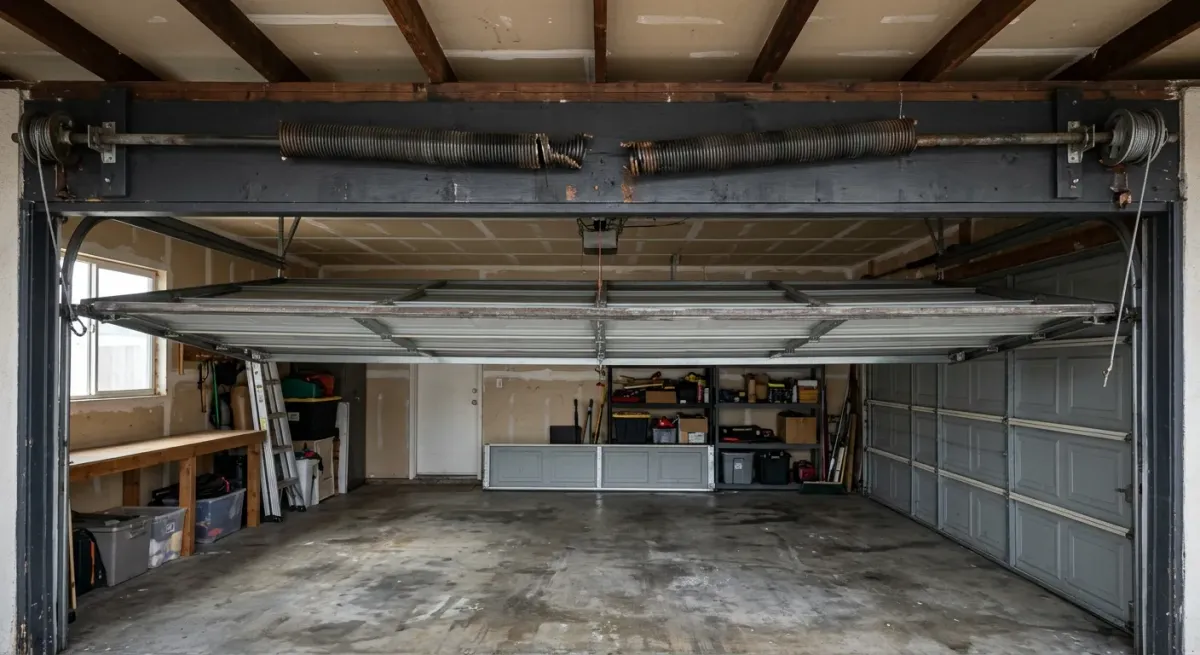
Most Lakewood two-car detached garages use torsion springs mounted above the door on a horizontal bar. They have a fixed cycle life, usually 10,000 open-close cycles. When one snaps, the door won't move. Do not try to wind or replace a torsion spring yourself. The stored tension is enough to cause serious injury. This is the single most common repair we run in Lakewood.

Corroded Cables and Drums

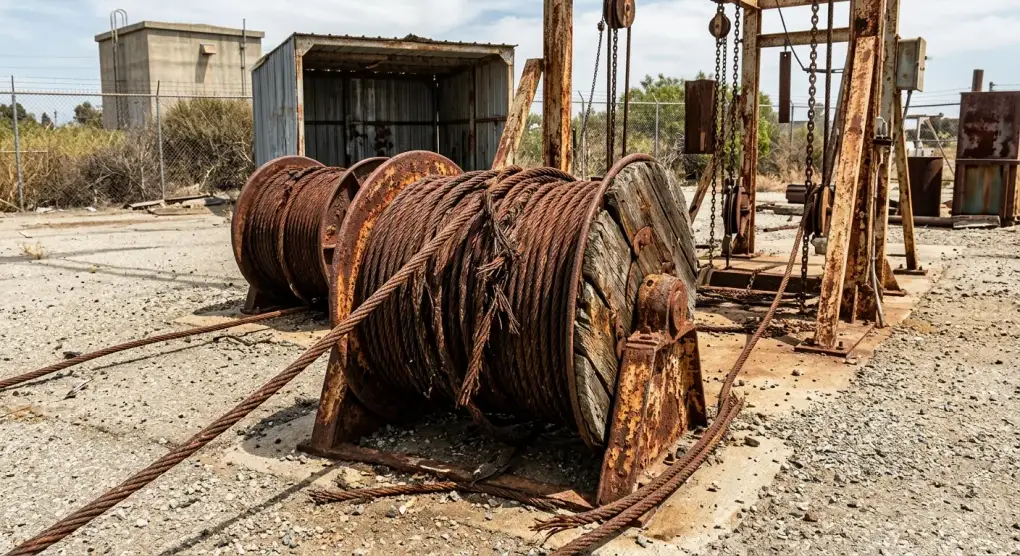
The marine layer that rolls off Long Beach and into Lakewood deposits salt moisture on every exposed metal surface, including the lift cables and cable drums at the bottom corners of the door. Cables that look intact on the outside can be fraying on the inside. We check both on every service visit because a snapped cable drops the door fast.

Off-Track Panels

When a cable breaks or a roller wears out, one side of the door can slip out of its track. Forcing the door open or closed from there bends the track and cracks panels. If your door is hanging at an angle or grinding, stop operating it and call. The repair is straightforward when the track is still straight; it gets more involved when it's not.

Opener Wear on Older Doors

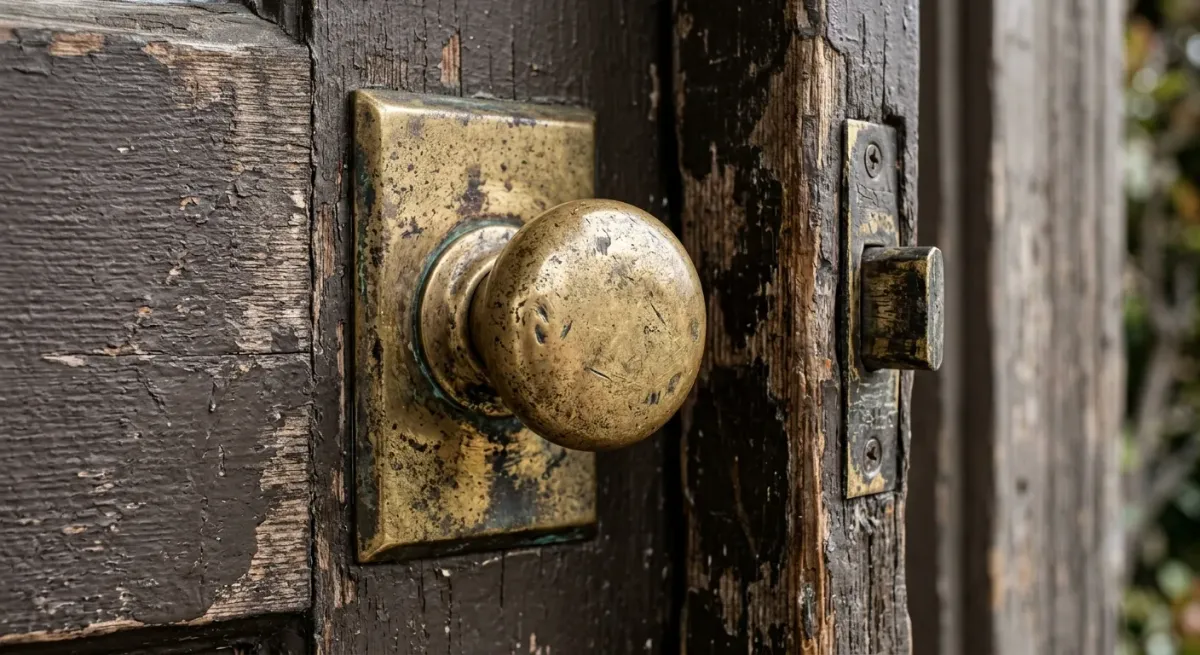
The original garage door openings on Lakewood's 1950s homes are standard single or double widths, but the doors themselves have sometimes been swapped for heavier modern insulated units over the decades. A chain-drive opener sized for a light old door may not have the torque for a heavier replacement. We confirm opener compatibility before recommending a unit.

Panel Damage

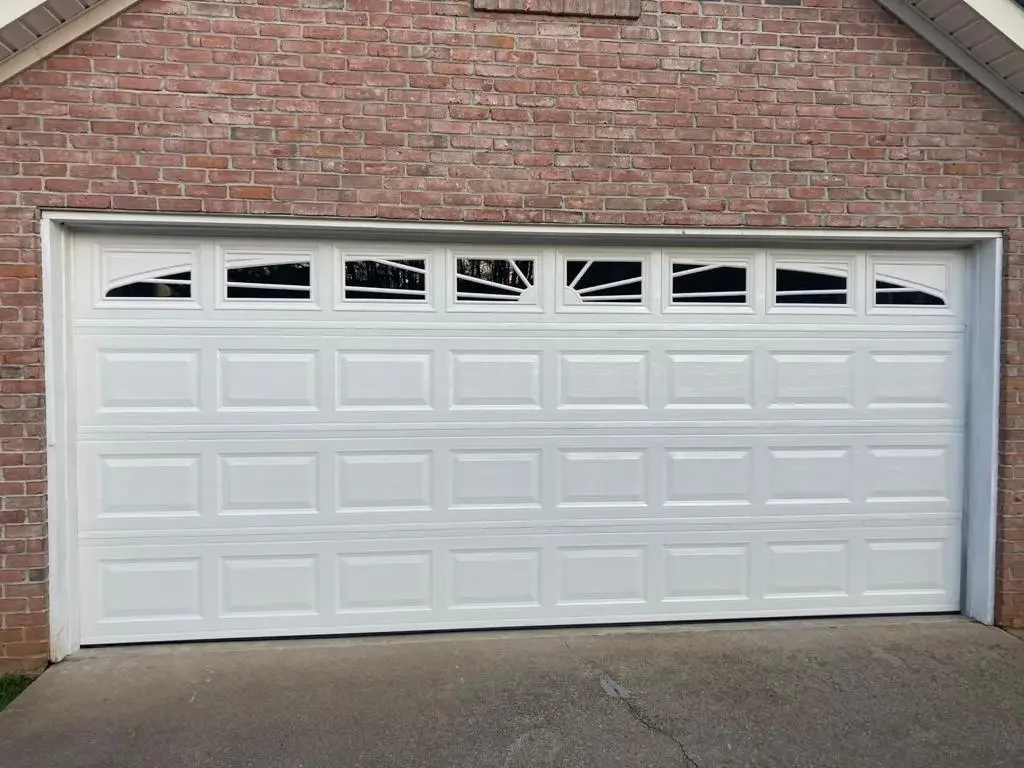
A backed-into door, a ball, a falling ladder, panels crack. In Lakewood's detached garages, a single damaged panel can usually be matched and swapped without replacing the full door. We'll tell you honestly whether a patch is the right call or whether the door's age makes a full replacement a better use of the money.

Track and Roller Deterioration

Hard water mineral buildup and coastal humidity together eat through the lubrication on rollers, and corroded nylon or steel rollers create resistance that strains every other component. A door that's gotten loud, slow, or jerky usually needs a roller replacement and a thorough track cleaning before anything else fails downstream.

Local Code

Permits for Garage Door Work in Lakewood
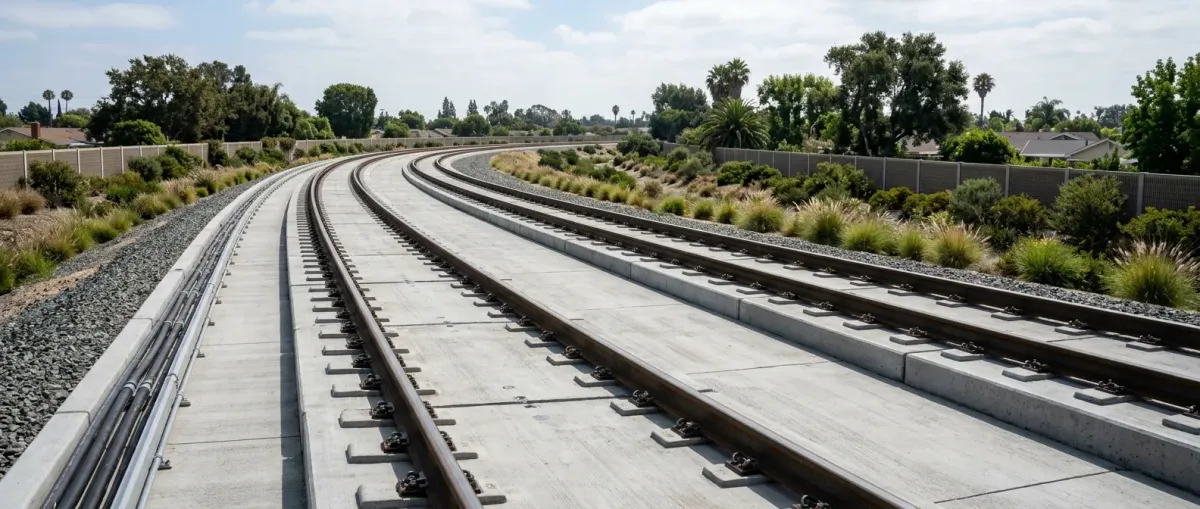
Lakewood's Building and Safety Division, housed within the Community Development Department, handles permit issuance for residential work. Here's the practical breakdown for garage door projects, based on what generally applies in Lakewood. You typically don't need a permit for replacing a garage door with the same size opening, installing a new opener on an existing door, or replacing springs, cables, or hardware. Those are like-for-like repairs and swaps. You do typically need a permit when you're changing the garage door opening size, building a new garage, or making structural modifications to the framing around the opening. If you're converting a single-car opening to a double, or enlarging a door opening in any direction, plan on pulling a permit first. We know which category your job falls into and we'll tell you upfront. We don't cut corners on code because a permit problem on a sale or insurance claim comes back on the homeowner. CA License #1135023 means we operate above board on every job.
torsion spring failure work, illustration in Lakewood, CA

Spring Types

Torsion vs. Extension Springs in Lakewood Garages
Lakewood's older detached two-car garages were built during the postwar housing boom, and many of the original garage doors used extension springs: the coiled springs that run horizontally above the upper tracks on each side of the door. They're simpler, cheaper, and still found on plenty of single-car doors across the city. Extension springs are under tension when the door is closed, and if one snaps without a safety cable threading through it, the spring can whip across the garage. Most modern replacements, and many of the updated two-car doors on Lakewood's larger detached garages, use torsion springs mounted on the horizontal shaft directly above the door opening. Torsion springs wind up as the door closes, storing energy to assist the lift. They last longer than extension springs under normal conditions, but they're under significantly higher tension and the winding adjustment process is genuinely dangerous without the right tools and training. When we assess a Lakewood garage, we note which spring type is installed, its estimated cycle life remaining, and whether the safety hardware around it, safety cables on extension springs, the winding cone setup on torsion springs, is in acceptable condition. We won't recommend replacing springs that have life left in them. And we won't tell you to DIY either one.
opener wear on older doors work, illustration in Lakewood, CA

What a Professional Inspection Covers

This is what we check on every Lakewood service call, in order.

Springs and Cable Condition

We look at the spring coil tightness, visible gaps or deformation, and the cable terminations at the bottom brackets. A cable that's fraying at the drum is a repair, not a wait-and-see.

Track Alignment and Hardware

Tracks are checked for plumb and level, and every roller, hinge, and bracket is checked for wear or looseness. Lakewood's older garages often have original stamped hardware that's reached the end of its service life.

Opener Force and Travel Settings

We test the opener's force adjustment. A door that reverses too easily won't seal properly; one that doesn't reverse with appropriate resistance is a safety hazard. Travel limits are confirmed so the door closes fully without over-travel.

Safety Sensor Alignment

The photo-eye sensors at the base of the door need to be aligned and free of obstructions. We test them with the door in motion, not just by looking at the indicator lights.

Maintenance

Lakewood's Climate Makes Seasonal Maintenance Non-Optional
Most garage door maintenance guides are written for the Midwest, where temperature swings are the main stress driver. Lakewood's climate is different. The temperature range is mild, but the marine layer brings consistent moisture, and the combination of salt air from the coast and the moderately hard water from Lakewood's groundwater wells (7.13 grains per gallon, per the 2025 report) accelerates corrosion on springs and steel components faster than a dry-climate homeowner would expect. Once or twice a year, springs, rollers, hinges, and tracks need to be lubricated with a product designed for the job. White lithium grease or a silicone-based lubricant works on rollers and hinges. Torsion spring coils take a light coat of garage door lubricant along the length of the coil. Do not use WD-40 as a lubricant. It's a penetrating oil and solvent, not a lubricant, and it will wash the existing grease out of your roller bearings. For Lakewood homes within closer proximity to the coast, we recommend checking the spring and cable hardware for visible surface rust every six months. Surface rust that's caught early can be addressed; rust that's penetrated into the coil cross-section means the spring needs replacement before it fails under load. See our full garage door services page for more on what's covered in a standard service visit.
corroded cables and drums work, illustration in Lakewood, CA

Gates in Lakewood: One Call for Both

Lakewood's residential neighborhoods include properties with driveway gates, and if yours is electric, sliding or swing, it shares more with your garage door opener than most people realize: limit switches, motor units, safety sensors, and the hardware mounting that takes the mechanical stress of thousands of cycles. We handle gate repair and service alongside garage door work. If your gate operator is grinding, failing to complete travel, or tripping its safety reverse inconsistently, those are the same diagnostic categories we work through on a garage door opener. We don't subcontract gate work to a separate crew. Mr. Mike Afec runs both sides of the operation, which means you get one point of contact, one warranty conversation, and someone who's seen enough gates in Southern California residential settings to tell you immediately whether you're looking at a motor replacement, a limit switch adjustment, or a mechanical issue with the gate hardware itself. We also serve surrounding communities throughout the South Bay and San Gabriel Valley corridor, one call to (404) 502-3502 reaches us directly. One call to (404) 502-3502 reaches us directly.
off track panels work, illustration in Lakewood, CA

Why Call Next Level in Lakewood

A few things that are checkable, not just claims.

CA License #1135023
D-28 Doors, Gates and Activating Devices Contractor, verify it with the CSLB directly.
BBB Accredited
Accreditation requires meeting BBB standards for trust and responsiveness, not every contractor qualifies.
Owner on the job
Mr. Mike Afec runs calls himself. No dispatch to a subcontract crew you've never spoken with.
Garage doors and gates both
Most competitors work one side. We handle both under one license and one conversation.

Lakewood Garage Door Questions

What's the most common garage door repair on Lakewood's older homes?
Torsion spring failure. Lakewood's housing stock is largely postwar construction, which means most garages are now working through their second or third set of springs. Torsion springs have a finite cycle life, and a door that's opened twice a day for 70 years has cycled through multiple sets. When a torsion spring snaps, the door won't lift. Don't force it. Call (404) 502-3502 and we'll have a technician out to assess it.
Can a handyman legally do garage door spring repair in Lakewood?
A California D-28 license, Doors, Gates and Activating Devices, is the contractor classification that covers garage door installation and repair work. A general handyman without that license is not the right call for spring replacement. Beyond the licensing question, torsion spring replacement specifically carries real injury risk from the tension stored in the spring. We hold CA License #1135023 and we do this work correctly.
Do I need a permit to replace my garage door in Lakewood?
For a straight swap, same size opening, same structural footprint, you generally don't need a permit from Lakewood's Building and Safety Division. If you're changing the size of the opening, modifying the framing, or adding a new garage structure, a permit is required. We'll tell you which category your job falls into before any work starts, so there are no surprises at escrow or during a future inspection.
How does Lakewood's coastal climate affect how often I should service my garage door?
More often than most guides suggest. The marine layer that comes off the coast deposits salt moisture on exposed hardware, and Lakewood's groundwater hardness (7.13 grains per gallon per the 2025 Water Quality Report) works mineral deposits into rollers and tracks over time. We recommend a professional inspection at least once a year for Lakewood homes, and a homeowner lubrication pass on the springs, hinges, and rollers every six months.
What are the signs a Lakewood garage door spring is close to failing?
A door that's gotten noticeably heavier to open manually, a visible gap in the spring coil, a grinding or straining sound from the opener when the door moves, or a door that opens unevenly on one side. Lakewood's salt air can corrode a spring from the inside of the coil outward, so a spring can look intact and still be compromised. If your door is showing any of these signs, don't wait for the snap. Call (404) 502-3502 for an assessment.
My Lakewood home has a flood risk flag: does that affect my garage door hardware?
Flooding risk affects more than the door panels. If water has reached the bottom of the door, it typically soaks the bottom weatherstrip and can wick into the lower panel sections on wood or composite doors. More critically, floodwater that reaches the track hardware, spring anchor brackets, or the opener motor unit introduces accelerated corrosion. After any significant water event, have the hardware inspected. We serve Lakewood homes throughout the city and can assess flood-related wear directly.
Why is garage door repair more expensive than I expected?
Parts cost more than most people realize, and labor on torsion springs specifically carries a risk premium that's legitimate. The tooling, the safety protocol, and the experience to do it without injury take time to build. The cheap quote usually means used parts, no warranty, or someone operating without a CA contractor license. Every job is different. Contact Next Level Garage Doors & Gates at (404) 502-3502 for an accurate estimate on your specific situation.

Lakewood and Surrounding Areas We Serve

We cover Lakewood and the surrounding communities in the South Bay and San Gabriel Valley corridor.

Lakewood's Garage Door Problem Doesn't Wait

Neither do we. Call now and talk directly to the operation.

Related

Next step

Tell us about the job

Your name, your number and what needs doing. A person from Next Level Garage Doors And Gates gets back to you.

Rather talk now?(404) 502-3502

No obligation


By submitting this form you agree that we may contact you about your request and share your name and email address with partner companies for email marketing. We never share your mobile number or text message consent with third parties or affiliates for marketing or promotional purposes.